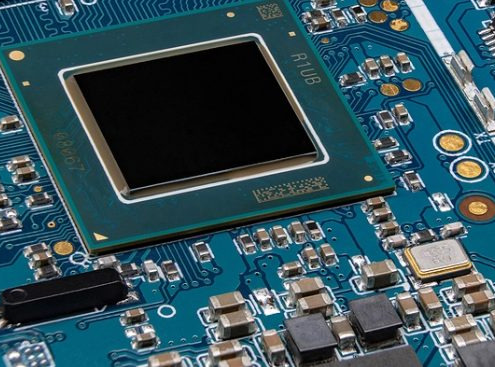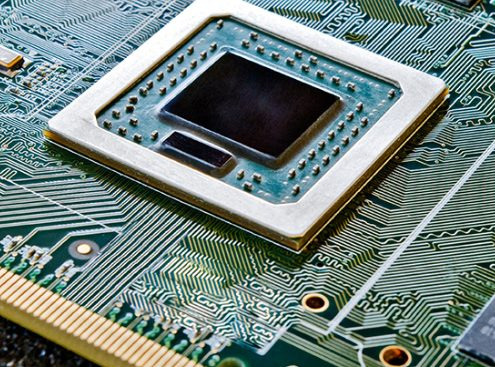
An Insulated Metal Substrate (IMS) is a specialized type of printed circuit board designed to enhance thermal management in electronic devices. It consists of a metal base layer, typically aluminum, coated with a dielectric layer to provide electrical insulation. IMS is crucial for dissipating heat efficiently from components like LEDs, power semiconductors, and automotive electronics, ensuring optimal performance and reliability. Effective thermal management not only prolongs component lifespan but also enhances overall system efficiency and safety. IMS’s ability to conduct and disperse heat makes it indispensable in modern electronics, where maintaining low operating temperatures is paramount for stable operation and performance optimization.
阅读更多Printed Circuit Boards (PCBs) are the backbone of modern electronic devices, providing the physical platform for electrical components and ensuring reliable connections through conductive pathways. They are essential in various industries, from consumer electronics to automotive and aerospace, due to their ability to enhance device performance, reduce size, and increase reliability.
As electronic devices become more compact and powerful, the demand for advanced PCB technologies has risen. Substrate-like PCB (SLP) represents a significant evolution in this field. SLPs are designed to offer higher density interconnects, improved signal integrity, and enhanced overall performance compared to traditional PCBs. This new trend in PCB technology is driven by the need for smaller, faster, and more efficient electronic devices, making SLPs a critical innovation for the future of electronics manufacturing.
阅读更多Printed Circuit Boards (PCBs) are the backbone of modern electronic devices, serving as the platform for mounting and interconnecting various electronic components. They are crucial in ensuring the functionality and reliability of everything from simple gadgets to complex machinery. PCBs provide mechanical support and establish electrical connections through conductive pathways etched from copper sheets laminated onto a non-conductive substrate. This structured layout allows for the compact and efficient design of electronic circuits, enabling the development of smaller, faster, and more powerful devices.
The purpose of this article is to delve into the concept of substrate layout within PCB design. Understanding substrate layout is essential for optimizing PCB performance, ensuring signal integrity, and enhancing overall device reliability. By exploring different types of substrates, materials used, and the significance of dielectric properties, this article aims to provide a comprehensive overview of how substrate layout influences PCB design and functionality.
阅读更多In the realm of printed circuit boards (PCBs), the substrate serves as the foundational material on which electronic components are mounted and interconnected. Defined as the non-conductive base that supports the conductive traces and components of a PCB, the substrate plays a pivotal role in the board’s performance and reliability. It provides mechanical support, electrical insulation, and influences crucial factors such as signal integrity and thermal management. Essentially, the substrate is the backbone that dictates the PCB’s structural integrity and operational efficiency. Understanding its composition, properties, and selection criteria is paramount for designing PCBs that meet stringent performance requirements across diverse applications in electronics.
阅读更多The Insulated Metal Substrate (IMS) is a crucial component in the realm of modern electronics, known for its superior thermal management properties. Unlike traditional printed circuit boards (PCBs), IMS substrates consist of a metal base, typically aluminum or copper, a dielectric layer, and a conductive copper circuit layer. This unique structure allows for efficient heat dissipation, making IMS substrates indispensable in high-power and high-temperature applications such as LED lighting, automotive electronics, and power modules. The importance of IMS substrates extends beyond their thermal capabilities; they also offer enhanced mechanical stability and reliability, essential for demanding environments. This article aims to delve into the various aspects of IMS substrates, including their materials, manufacturing processes, key features, and real-world applications. Understanding the benefits and applications of IMS substrates is vital for engineers and designers striving to optimize performance and longevity in electronic devices.
阅读更多ALCANTA
CONTACT US
4th Floor, A3 Building, HuaFeng Industrial Park, GuanTian Village, BeiHuan Road, ShiYan Street, Bao An District, Shenzhen City, Guangdong Province, China
Tel: +86 755 8524 1496
WhatsApp: 8615014077679
📧 pcb@alcantapcb.com
CERTIFICATIONS
SHIPPING
![]()
CERTIFICATION
![]()
RECENT ARTICLES
Glass Substrate Manufacturing | Process, Materials & Applications2026-07-23 - 08:45
Copper Core PCB vs Aluminium Core PCB Explained2025-09-18 - 07:13
Microwave PCB Manufacturers | RF Design and Fabrication2025-09-16 - 07:58
Flex PCB Manufacturing Process: Step-by-Step Guide2025-09-10 - 06:59